Early prevention of the most common oral disease and complications is of the utmost importance in keeping your pets' teeth in good health.
Studies have shown that without proper dental care up to 80% of dogs and 70% of cats may show signs of periodontal (oral) disease by the age of three. With your help, your pets can have healthy teeth and gums throughout their lives.
Periodontal and gum disease is caused by a build-up of plaque and tartar on the surface of your pets' teeth. The plaque formation develops from bacteria and food particles that get lodged between the teeth and gums. This may also lead to inflammation of the gums and surrounding root structures; causing little “Fluffy” to have smelly breath when she gives kisses!
Regular home check-ups on your pet are important in detecting the first signs of periodontal disease and complications. The signs to look out for may include:
• Bad breath
• Discoloration
• Bleeding from the mouth or pain when eating
• Loss of appetite and weight loss
But why is it important to ensure that your pets’ teeth are kept in good shape?
A pet with healthy teeth will have better breath! Dental disease may also lead to complications with other organs in your pets’ body, leading to a shortened life span. Most animals are very good at hiding pain, often making it difficult for owners to know when their pet has a problem until the situation is at a very advanced stage.
Your geriatric pets’ teeth will require more intense dental care and treatment. Many older pets’ teeth will have worn down to a point where it causes severe daily discomfort, leading to a loss of appetite and weight loss.
Periodontal disease is one of the most common complaints seen from clients. However it is also one of the most treatable! A dental procedure from your vet may be a simple and effective way in ensuring a long and healthy life for little “Fluffy”.
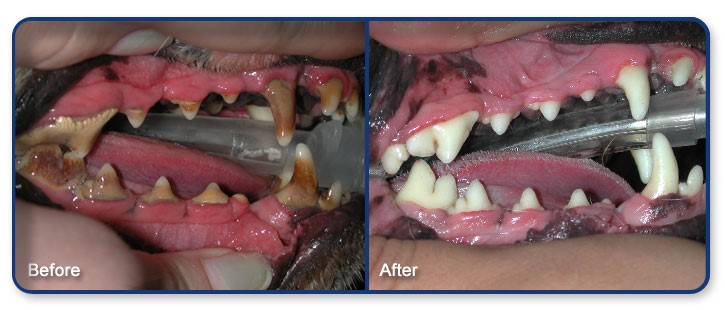
Taking your pet for regular dental check-ups with your vet ensures that problems are detected early and can be dealt with in the relevant manner. The correct diet will also play a huge role in ensuring that your pets’ teeth and gums remain healthy. Your veterinarian will be able to do a thorough examination of your pets’ dental health to determine what the best approach to treatment and care will be. Brushing helps to reduce plaque build-up but it will not remove tartar. This tartar build up will need to be removed by your veterinarian with a professional scaling and polishing, usually accomplished under anaesthesia. Your vet will be able to advise you on the best treatment and dental care
Good dental health starts with a dental routine at home. A high quality dry kibble will ensure that plaque build up is reduced. There are also many dental products available to reduce build up, freshen breath and postpone the need for veterinary dental care. Brushing your pets’ teeth is a very effective method in reduce plaque formation.
Human toothpaste should never be used on your pet!!
Human toothpaste contains fluoride and xylitol which are extremely poisonous for pets. Rather consider using a toothpaste specifically made for pets; available from your local vet.
tropiclean.com
www.pethealthnetwork.com